

By Mboh Promise
By recycling discarded plastic bottles into laboratory-scale pans, 18-year-old Amashi Victory Titih has shown how a community problem can be tackled with simple local solutions while providing children and students with practical learning opportunities.
Plastic waste remains one of the biggest environmental concerns in Bamenda, the chief town of the Northwest region. Plastic bottles and other non-biodegradable waste are commonly dumped into gutters, streams, and open spaces. During the rainy season, blocked drainage channels contribute to flooding in several neighbourhoods. A 2020 study estimated that Bamenda generates about 18.6 tonnes of plastic waste every day, with only a small proportion recycled, leaving much of it to enter the environment.
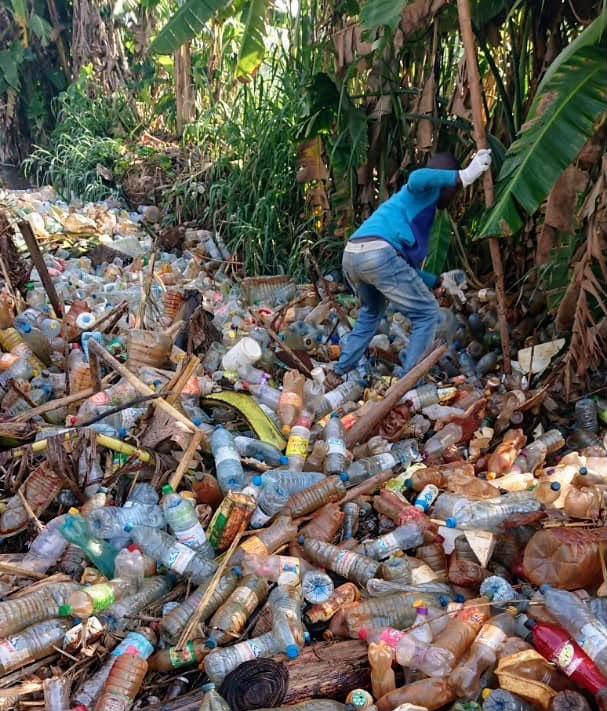
Victory grew up in Nitob IV, a neighbourhood next to Alakuma in Mezam Division, where a stream has gradually been narrowed by plastic waste trapped beneath a bridge. During heavy rains, the stream frequently overflows into nearby farms and houses. One afternoon, she was forced to wait for floodwaters to subside before she could cross the bridge on her way home. That experience stayed with her.
An idea from her former physics classroom later provided a possible answer.
While in high school, her physics teacher showed students how to make durable scale pans from plastic bottles after disposable cups repeatedly broke during practical lessons. Remembering that exercise, Victory decided to collect plastic bottles from the Alakuma stream and recycle them into laboratory equipment for her former school.
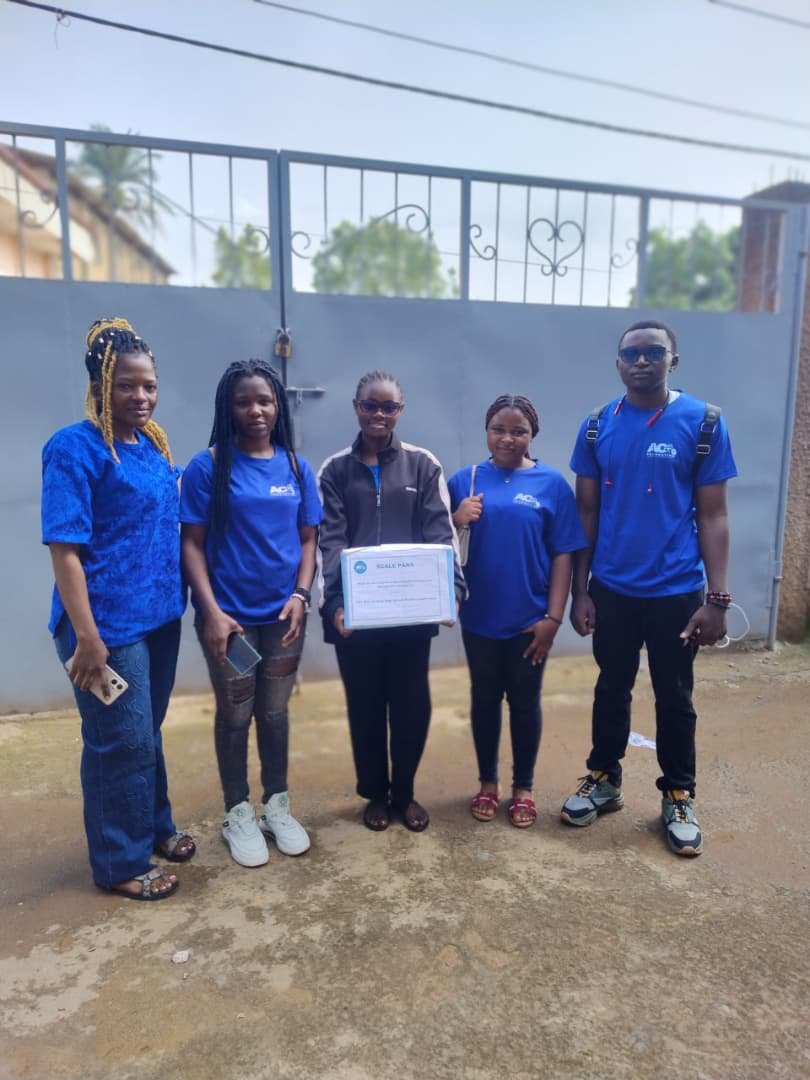
With four young volunteers, she collected 100 plastic bottles from the stream before washing and preparing them for reuse. She later partnered with ACT Foundation to carry the project further.
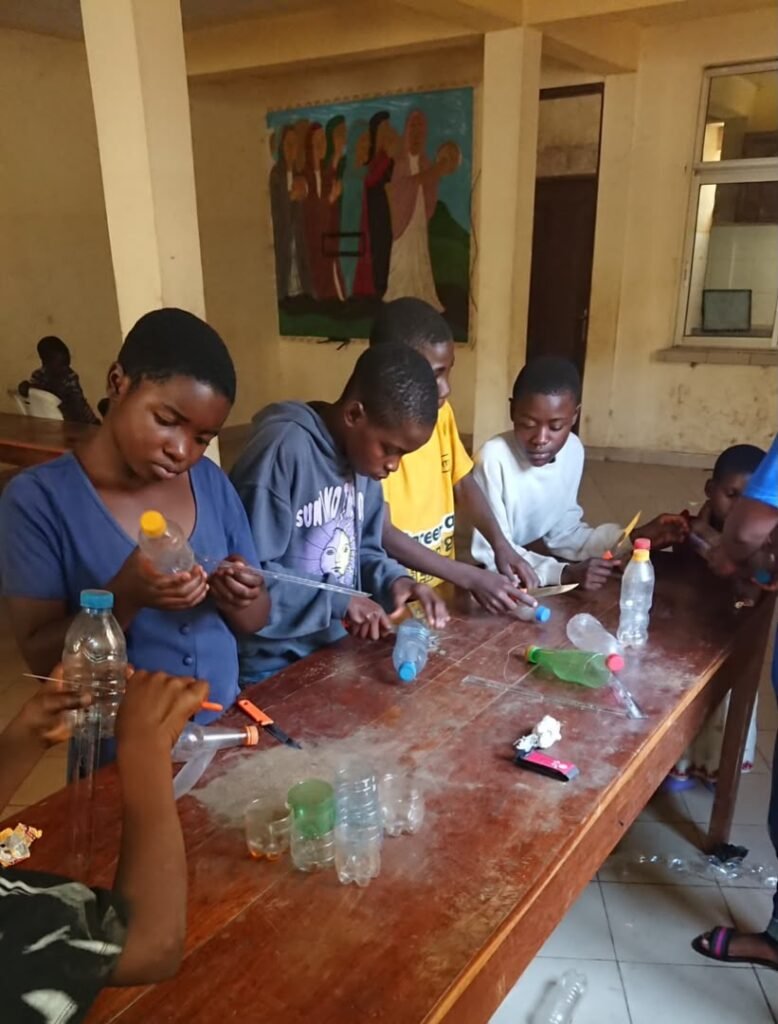
At Good Shepherd Home orphanage in Abangoh, 40 children worked alongside ACT Foundation volunteers to produce 70 scale pans. The children were divided into teams responsible for washing, cutting, melting and packaging the materials. They also used basic mathematics to measure and prepare the packaging, turning the exercise into a practical learning session.
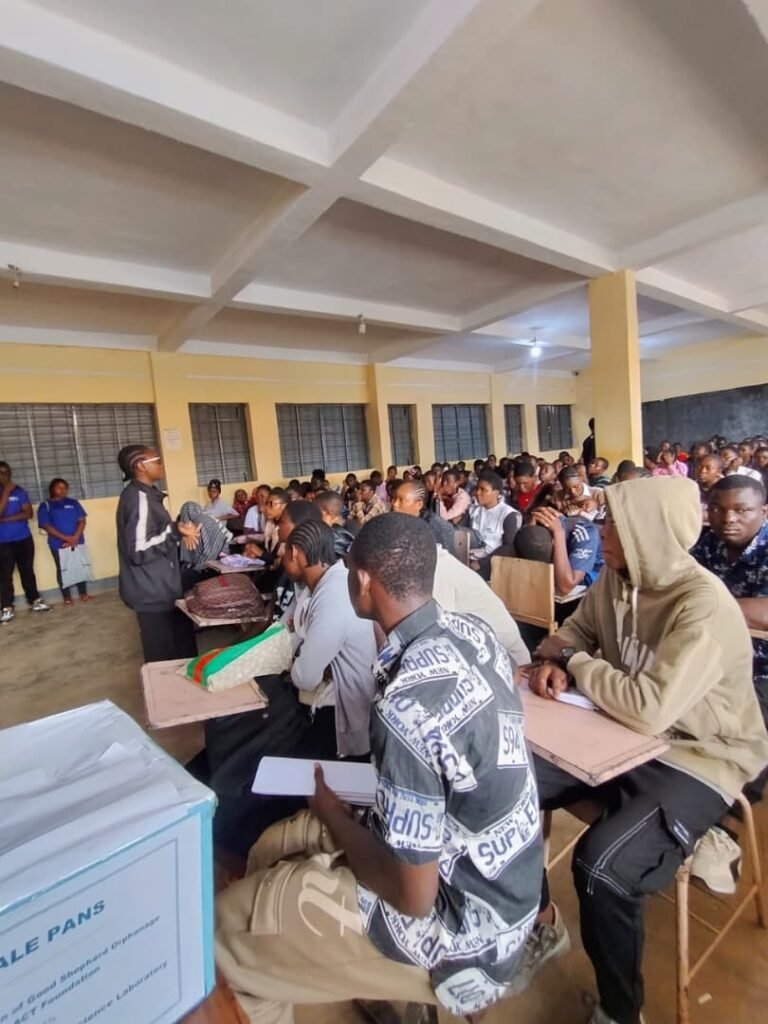
The final stage took the team to Step by Step Educational Complex in Ntarinkon, where the recycled scale pans were donated to the school’s science laboratory. During the visit, students also received talks on community service, career development and the importance of building practical skills outside the classroom.
Looking into the future, Victory now plans to study Chemical Engineering with the aim of developing better methods for recycling plastics into raw materials that can be used to manufacture new products.
Victory says the project also showed the limits of manual recycling. Without moulds and specialised equipment, only part of each plastic bottle could be reused, leaving behind waste that could not easily be processed.
“This project has deepened my interest in plastic recycling. While producing the scale pans, we had limited control of its shape and how much of the plastic bottles we could use, we could only do simple processes like cutting and creating holes with heat. I want to study Chemical Engineering to gain expertise in advanced plastic recycling technologies, including depolymerization and polymer processing, so that I can help convert plastic waste into raw materials that can be remolded into new, useful products,” says Victory.
As plastic waste continues to accumulate across Bamenda, environmental experts say stronger waste collection systems, community recycling programmes, and greater investment in recycling technology will be necessary to reduce pollution and minimise flooding. Projects such as Victory’s show that local initiatives can make a difference while encouraging young people to take an active role in solving environmental problems.